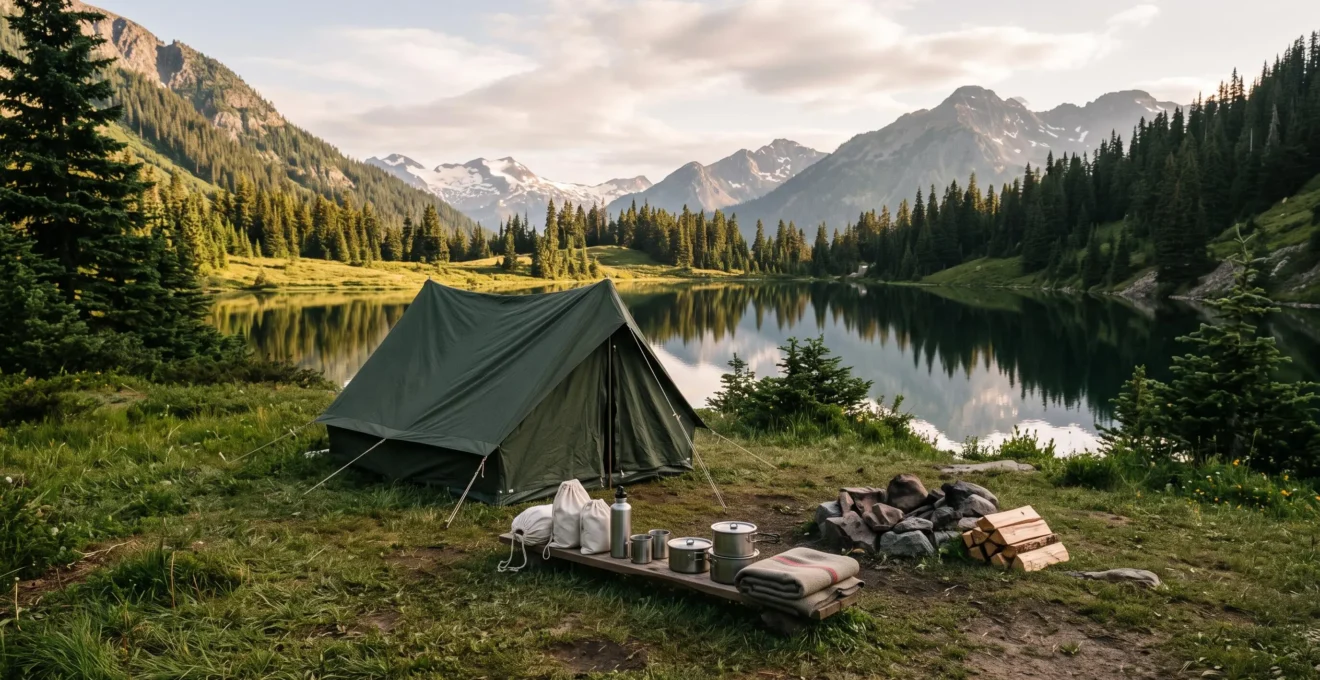
Achieving zero-waste in the backcountry is not about buying more eco-gadgets; it’s about fundamentally redesigning your camping systems to eliminate waste at the source.
- The biggest source of trail waste—food packaging—can be almost entirely eliminated through strategic « pre-cycling » and repackaging at home.
- « Biodegradable » products often fail to break down in nature and are a poor substitute for genuinely reusable systems.
Recommendation: Shift your mindset from « pack it in, pack it out » to « waste as data. » Treat every piece of rubbish you carry home not as a failure, but as a crucial data point for optimising your system for the next trip.
For the committed outdoor enthusiast, the principle of « Leave No Trace » is second nature. We diligently pack out what we pack in, leaving the wilderness as we found it. Yet, at the end of a multi-day trek, the bulging rubbish bag feels like a contradiction. We’ve merely shifted the waste from the trail to our bin at home. The common advice—use a reusable bottle, buy in bulk—is a good start, but it barely scratches the surface of the operational challenges faced on an extended trip where every gram counts.
This isn’t about simply collecting better habits; it’s about a complete system redesign. The real journey to zero-waste camping begins long before you reach the trailhead. It involves a paradigm shift in how you plan your food, select your gear, and even manage your personal hygiene. It requires moving beyond the myth of « biodegradable » quick fixes and embracing the discipline of reusability, even when it feels inconvenient.
But what if the small amount of waste you still create wasn’t a sign of failure, but a tool for improvement? This guide moves beyond the platitudes to offer a new perspective: treating zero-waste as an engineering problem. We will explore how to systematically deconstruct your camping habits to eliminate waste at its source, manage the unavoidable with precision, and even extend this ethical framework to ensure your presence benefits the environments and communities you visit. This is about transforming your impact from minimal to zero, and perhaps even to a net positive.
This article provides a complete framework for redesigning your approach to wilderness travel. Below is a summary of the key systems we will deconstruct and rebuild for a truly zero-waste experience.
Summary: A Systems-Thinking Approach to Zero-Waste Camping
- Why Does Conventional Camping Produce 5x More Waste Than Everyday Urban Living?
- How to Repackage 7 Days of Camping Food Without Any Single-Use Plastic?
- Biodegradable Camping Products vs Genuinely Reusable Systems: Which Is Actually Greener?
- The Zero-Waste Camping Error That Makes Burning Trash Seem Environmentally Acceptable
- When Does Committed Zero-Waste Practice Mean Carrying 2 kg of Waste Home from a Week-Long Trek?
- How to Manage Toilet Needs on Multi-Day Hikes Without Contaminating Water Sources?
- Why Does Tourism Money Fail to Reach 80% of Local Communities in Popular Destinations?
- How to Practice Ethical Tourism That Benefits Local Communities Rather Than Exploiting Them?
Why Does Conventional Camping Produce 5x More Waste Than Everyday Urban Living?
The paradox of wilderness travel is that in our attempt to connect with nature, we often bring the worst habits of consumer culture with us: convenience packaging. At home, we have access to recycling bins, compost, and established waste management systems. In the backcountry, every single item is carried on our backs, and its waste footprint becomes glaringly obvious. The reliance on single-serving meals, snack bars in foil wrappers, and disposable items creates a concentrated stream of non-recyclable, high-volume waste.
This isn’t a minor issue. Natural areas are bearing the brunt of this convenience-focused mindset. For instance, Leave No Trace research shows that over 100 million pounds of waste are generated annually in U.S. national parks alone. While this figure includes all park visitors, it highlights the scale of a problem that multi-day trekkers contribute to with every freeze-dried meal pouch and plastic-wrapped snack. Unlike urban waste which is hidden away, trail waste is a direct and visible consequence of our choices.
The core of the problem is a system designed for convenience, not sustainability. Supermarket shelves are filled with products optimised for shelf life and marketing, not for minimal-waste packing in a rucksack. To achieve zero-waste, we must consciously opt out of this system and build our own, starting with the single largest source of trail waste: food packaging.
How to Repackage 7 Days of Camping Food Without Any Single-Use Plastic?
Food is the heaviest item in a multi-day pack and the number one source of single-use waste. The solution is « pre-cycling »—the act of eliminating waste at home, before it ever enters your pack. This means ditching the colourful, noisy packaging of commercial camping food and creating your own lightweight, zero-waste system. This practice is already gaining traction; a 2023 survey found that while only 45% of backpackers buy food in bulk, over 60% already use some form of reusable containers. The key is to make this the default for everything.
Your toolkit for this system redesign is simple: reusable silicone pouches (like Stasher bags), beeswax wraps, and small, lightweight cloth bags. At home, portion out your bulk-purchased grains, pasta, and snacks into these containers. For things like cooking oil or condiments, use small, leak-proof reusable travel bottles. This process not only eliminates plastic but also allows for perfect portion control, reducing food waste and unnecessary pack weight.
As the image above illustrates, the textures and materials of a reusable system—the flexible grip of silicone, the waxy fold of a beeswax wrap—become as much a part of the camping experience as the trail itself. Dehydrating your own meals is the ultimate step in this system. It gives you complete control over ingredients and eliminates the bulky, non-recyclable pouches of commercial freeze-dried meals.
Action Plan: Your Low-Waste Backcountry Meal Strategy
- Choose your meals: Prioritise one-pot meals (soups, burritos, stir-fry) where all ingredients can be combined to reduce packaging layers and complexity.
- Source your ingredients: Dehydrate your own meals at home to control portions and spicing, or purchase ingredients from bulk bins to avoid packaging.
- Avoid messy garbage: Steer clear of greasy meals like fresh bacon that create smelly, difficult-to-manage waste that attracts animals.
- Consult expert resources: Use dedicated backcountry recipe guides for instructions on dehydration, preparation, and efficient rehydration on the trail.
Biodegradable Camping Products vs Genuinely Reusable Systems: Which Is Actually Greener?
In the quest for a smaller footprint, it’s tempting to reach for products labelled « biodegradable » or « compostable. » From cutlery to coffee pods, these items promise to magically return to the earth. However, this is a dangerous misconception in a wilderness context. True biodegrading requires specific conditions—heat, moisture, and microorganisms—that are rarely met when an item is buried in a cathole or left under a rock. More often than not, these products persist in the environment for years, fragmenting into smaller pieces and behaving much like conventional plastic.
The issue is one of « downstream impact. » Many of these products are designed for industrial composting facilities, not a shallow hole in the forest floor. As the editorial team at Terradrift points out, this distinction is critical.
Most compostable products need to be commercially composted in order to break down quickly. They won’t decompose in your backyard.
– Terradrift editorial team, Terradrift, ‘Zero Waste Backpacking?! It’s Possible! Here’s How.’
This is why a reusable system will always be superior to a « disposable » one, no matter how green the label. A steel spork, a metal cup, and a washable cloth napkin create zero waste, trip after trip. While they require a small amount of water to clean (which must be done 200 feet from water sources), their lifetime environmental cost is vastly lower than any single-use alternative.
Case Study: The Middle Ground of TrailFork’s Compostable Packaging
Some brands are trying to bridge the gap. TrailFork, for example, offers backpacking meals in fully compostable packaging. This is a significant improvement over traditional foil-lined plastic pouches. However, it still relies on the user to pack it out and dispose of it in a commercial composting facility, which may not be available. It represents a better option than the status quo, but reinforces the superiority of a truly reusable system where there is nothing to dispose of in the first place.
The Zero-Waste Camping Error That Makes Burning Trash Seem Environmentally Acceptable
A common and dangerous mistake made by well-intentioned campers is the belief that burning small pieces of trash in a campfire is a harmless way to reduce weight and volume. This practice stems from a misunderstanding of both combustion and Leave No Trace principles. Burning waste, especially plastics and foil-lined wrappers, releases toxic chemicals into the air and leaves behind a residue of micro-fragments and harmful ash in the fire pit. It doesn’t make the waste disappear; it just disperses it in a more insidious form.
Furthermore, what seems like a small act can have significant cumulative effects. Authorities on wilderness ethics are clear on this point. The National Park Service, for example, explicitly advises against this practice, stating a need to « Pack out toilet paper– burning it is not recommended, and it does not biodegrade well when left in nature. » The same logic applies tenfold to food packaging.
The impulse to burn trash is also linked to a casual attitude towards fire safety that has devastating consequences. Campfires are the cause of many wildfires, and the search for wood can scar the landscape. A study of backcountry campsites found that fire-related activities resulted in 2,377 damaged trees and 3,366 cut stumps in a single national park. A zero-waste ethic must include minimising fire impact, which means using a lightweight stove for cooking and never using a fire as a rubbish incinerator. The rule is simple and absolute: if you packed it in, you must pack it out.
When Does Committed Zero-Waste Practice Mean Carrying 2 kg of Waste Home from a Week-Long Trek?
Embracing a true zero-waste system forces a profound mental shift. The goal is no longer just to « leave no trace » on the trail, but to understand and eliminate the trace we leave on the planet. This often means that, especially in the beginning, you will be carrying waste home. This isn’t a failure; it’s the most critical part of the process. This bag of rubbish is not trash; it is data. Each wrapper, tag, or disposable item is a data point showing a « leakage point » in your system.
This experience is a powerful teacher. A writer for GearJunkie documented this exact process during a multi-day trip on the Trans-Catalina Trail. Despite best efforts, a small Ziploc bag slowly filled with granola bar wrappers and other « unavoidable » waste. The reflection was that LNT practice shifts waste in space but doesn’t eliminate it. Your carried-out waste is the starting point for your next trip’s planning: « How can I eliminate this specific item next time? »
This act of carefully collecting and carrying your waste, as pictured here, becomes a ritual of accountability. It connects you directly to your consumption patterns in a way that tossing something in a bin never can. As one backpacker noted after their first low-waste trip, « It also meant obtaining a level of awareness about our waste consumption that we’d never had before. » This awareness is the true prize. The 2kg of waste from your first trip becomes 500g on the second, and maybe just a few stubborn items on the third. The weight in your rubbish bag decreases as the strength of your system increases.
How to Manage Toilet Needs on Multi-Day Hikes Without Contaminating Water Sources?
No discussion of zero-waste camping is complete without addressing human waste. Improper disposal is not only unpleasant but poses a serious health risk by contaminating water sources with pathogens. The principles of managing toilet needs in the backcountry are a core component of the Leave No Trace system and are non-negotiable for any responsible outdoor enthusiast.
The primary method for solid waste disposal is the cathole. This is a simple hole dug in the soil, ideally in a spot with rich organic material that will aid decomposition. The location is critical: it must be at least 200 feet (about 70 adult paces) away from any water, trail, or campsite. This distance is essential to prevent contamination of water sources and to ensure other visitors don’t stumble upon it. After use, the cathole should be filled back in with the original soil and disguised with natural material.
A crucial element of this system is what to do with toilet paper. While it may seem natural, it should never be buried. It decomposes very slowly in most conditions and is often dug up by animals. The correct procedure is to pack it out. A dedicated opaque, sealed bag (like a zip-top bag covered in duct tape) is the standard method for storing used toilet paper discreetly and hygienically until you can dispose of it properly at the end of your trip. The same rule applies to all hygiene products, including wet wipes and sanitary items. This discipline is the hallmark of a truly committed zero-waste camper.
Why Does Tourism Money Fail to Reach 80% of Local Communities in Popular Destinations?
The zero-waste ethic, when fully embraced, extends beyond our environmental footprint to our economic impact. Just as we strive to prevent waste from polluting the natural world, we should also strive to prevent our spending from being wasted. In the tourism industry, this phenomenon is known as « economic leakage. » It occurs when the money a tourist spends in a destination does not stay in the local economy, but instead « leaks » out to international corporations that own the hotels, tour companies, and supply chains.
The scale of this problem is staggering. For many developing destinations, this leakage is the norm. According to a report from the Travel Foundation, it’s estimated that between 50% and 80% of tourist spending leaks out of the local economy. Studies have shown this in action, with leakage rates estimated at 70% in Thailand and 80% in the Caribbean, largely due to the dominance of foreign-owned, all-inclusive tourism models. This means the very communities that make a destination attractive often see little to no benefit from the visitors who enjoy their home.
As Dr. Lynn Minnaert, an expert in tourism equity, bluntly states, « Only a fraction of money spent by tourists stays with local communities – so often, the people are not actually benefiting much from your being there. » This transforms our travel choices from simple logistics to profound ethical decisions. A trekker committed to a holistic zero-waste philosophy must ask: is my trip creating value for the local community, or am I just another source of leakage?
Key Takeaways
- True zero-waste is a system, not a product. Focus on redesigning your habits around food, hygiene, and gear rather than buying « eco-friendly » disposables.
- Your biggest leverage point is pre-cycling: eliminating waste at home before your trip by repackaging food from bulk into reusable containers.
- Treat any waste you pack out as valuable data. Analyse it to identify weak points in your system and improve for your next trip.
How to Practice Ethical Tourism That Benefits Local Communities Rather Than Exploiting Them?
Just as we redesign our packing system to eliminate plastic, we can redesign our travel system to eliminate economic leakage. The solution is to consciously and deliberately direct our spending towards locally owned businesses. This is the economic equivalent of choosing a reusable steel spork over a compostable one; it’s a fundamentally more direct and effective approach. Instead of booking with a multinational tour operator, we hire a local guide. Instead of staying in a foreign-owned hotel chain, we choose a family-run guesthouse. Instead of eating imported foods, we seek out restaurants serving local produce.
The impact of this shift is immense. The Adventure Travel Trade Association found that, in terms of local economic value, the spending of four adventure travellers is equivalent to that of 96 cruise tourists. This is because independent, adventurous travellers are more likely to engage directly with the local economy. They eat at local cafes, buy crafts from local artisans, and use local transport. This is the zero-waste principle applied to economics: cutting out the wasteful « middleman » of global corporations.
This practice deepens the travel experience. A local guide, as seen above, doesn’t just show you the path; they share stories, context, and a connection to the land that a guidebook never can. To put this into practice, make these choices your default:
- Transport: Choose locally owned transport options over international chains.
- Shopping: Shop at local, independent stores rather than retailers selling imported goods.
- Food & Drink: Prioritise locally grown, brewed, or produced food and beverages over imported brands.
- Accommodation: Book stays at locally owned guesthouses, homestays, or small inns instead of foreign-owned resorts.
By applying this system-level thinking to your spending, you ensure that your journey not only leaves no trace environmentally but leaves a positive and lasting impact on the community that hosted you. This is the ultimate expression of a zero-waste ethic. Now, the next logical step is to apply this data-driven mindset to your own habits by performing a waste audit on your next trip, identifying every piece of waste and creating a plan to eliminate it in the future.
Frequently Asked Questions on Wilderness Waste Management
How deep should a cathole be dug for human waste?
Solid human waste should be deposited in catholes dug 6 to 8 inches deep, at least 200 feet from water, camp, and trails. The hole should then be covered and disguised with natural materials when finished.
Should toilet paper be buried or packed out?
Toilet paper and all hygiene products should always be packed out. They do not biodegrade effectively in most environments and can be dug up by animals. They should not be buried or burned.
How far from water should dishes or bodies be washed?
To wash yourself or your dishes, you must carry water at least 200 feet away from any stream or lake. Use only small amounts of biodegradable soap, if any, and scatter the strained dishwater broadly.