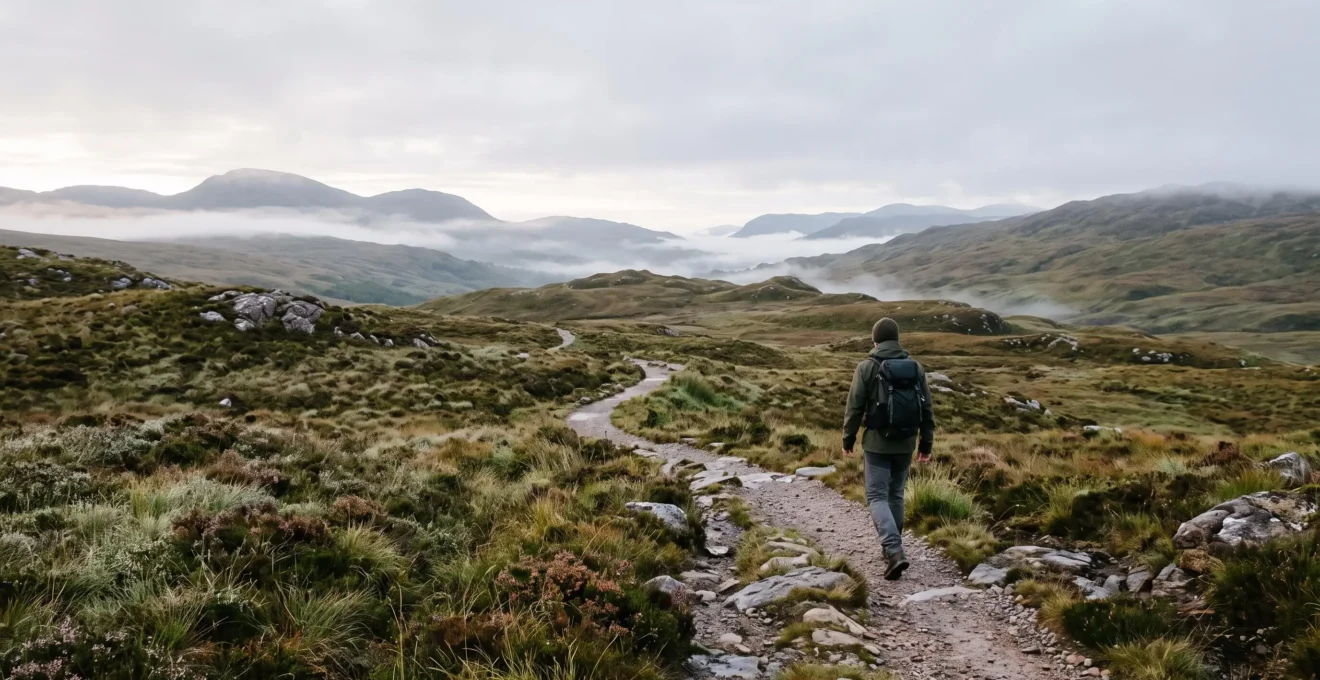
In summary:
- Responsible hiking is not just about following rules but understanding the cumulative ecological impact of your actions.
- Recognising and protecting fragile ecosystems like peatlands is more critical than simply « sticking to the path. »
- Small, seemingly harmless acts like building cairns or taking shortcuts cause significant, long-lasting damage.
- True conservation involves shifting from a passive visitor to an active steward of our shared natural heritage.
For anyone who has felt the wind on a high fell or watched the mist roll over a Scottish loch, the desire to protect the UK’s wild places is instinctive. We arrive armed with good intentions and the familiar mantra: take only pictures, leave only footprints. We pack our rubbish out, close gates, and try not to disturb the peace. These are the foundational rules of outdoor ethics, the platitudes of responsible recreation taught to us from a young age, and they are undeniably important.
But what if these rules, on their own, are no longer enough? In an era where our National Parks face unprecedented pressure, simply avoiding littering is the bare minimum. The real challenge, and the deeper responsibility, lies in understanding the subtle, often invisible, chain reactions our presence sets in motion. It’s about grasping why one shortcut can scar a landscape for a decade, why feeding a single fox endangers both wildlife and future visitors, and why even the innocent act of stacking stones can unravel a delicate micro-habitat.
From my perspective as a conservation officer, the most meaningful shift isn’t about memorising a longer list of prohibitions. It’s about cultivating a mindset of landscape stewardship. This guide moves beyond the basics to explore the ecological ‘why’ behind the rules. It will equip you to read the landscape, understand its fragilities, and make conscious choices that actively contribute to its preservation. We will explore the science behind trail closures, the hidden harm in common habits, and how you can become a true guardian of the wild places you love.
This article provides an in-depth look at what it truly means to be a responsible walker in the UK’s most cherished landscapes. Explore the sections below to deepen your understanding and enhance your role as a steward of the outdoors.
Summary: A Guide to Responsible Hiking in UK National Parks
- Why Do Some UK Nature Reserves Close Trails During Bird Nesting Season?
- How to Recognize Fragile Ecosystems That Require Staying on Marked Paths?
- Visiting Iconic Nature Reserves vs Hidden Conservation Sites: Which Approach Helps More?
- The Conservation Zone Error That Habituates Wildlife and Endangers Future Visitors
- When Should You Volunteer for Trail Maintenance vs Donate to Conservation Organizations?
- Why Do Small Acts Like Cairn-Building Cause Significant Ecological Harm Over Time?
- Why Does One Shortcut Across Moorland Vegetation Create Damage Lasting a Decade?
- How to Practice Leave No Trace Principles on UK Hiking and Camping Trips?
Why Do Some UK Nature Reserves Close Trails During Bird Nesting Season?
A sign announcing a ‘temporary path closure’ during spring and early summer can feel like an inconvenience. The path looks perfectly fine, and the birdsong seems as lively as ever. However, these closures are not arbitrary; they are a critical conservation tool rooted in law and science. Many of the UK’s most treasured bird species, particularly ground-nesting birds like the Curlew, Nightjar, and rare birds of prey, are acutely vulnerable to human disturbance. For these species, a walker or a dog straying just a few metres off a path can be catastrophic.
The core issue is stress. Your presence, even if unintentional, can cause a parent bird to flee its nest, leaving eggs or young chicks exposed to predators and the elements. Repeated disturbance can lead to nest abandonment altogether, a devastating blow for species already facing population decline. This is not merely guidance; it is a legal matter. For the most vulnerable species, it is a criminal offence under UK law, as detailed in the Wildlife and Countryside Act, to intentionally or recklessly disturb them at or near their nest.
The seriousness of this is not to be underestimated. In a recent case, a man was prosecuted for disturbing a nesting Honey Buzzard, a protected Schedule 1 species. The conviction and hefty fine underscore that these closures are an active enforcement measure, not just a polite request. Respecting a closed trail is one of the most direct and impactful ways a hiker can contribute to the survival of the UK’s avifauna. It’s a small sacrifice that ensures the next generation of birds can take flight.
How to Recognize Fragile Ecosystems That Require Staying on Marked Paths?
The advice to « stick to the path » is universal, but its true importance becomes clear when you learn to recognise the fragile ground beneath your feet. Not all terrain is created equal. A well-trodden forest path is far more resilient than the delicate, living carpet of a peat bog or ancient dune system. In the UK, our peatlands are a prime example of a globally significant and highly vulnerable ecosystem. They are our largest terrestrial carbon store, but it’s a sobering reality when ONS data shows only 22% of UK peatlands remain in a near-natural, carbon-storing state.
Recognising these areas is the first step toward protecting them. The main types of peatland you’ll encounter are:
- Blanket bog: Found across hilly and mountainous terrain, this globally rare habitat is fed solely by rainfall and is characterised by a deep layer of peat covered in sphagnum mosses, cotton grass, and heather.
- Raised bog: Typically found in lowland areas, these dome-shaped bogs are also dominated by acidic, nutrient-poor vegetation.
- Fen: Fed by groundwater as well as rain, fens are less acidic and support a richer variety of plants, including sedges and reeds.
The key to their fragility is the living vegetation, particularly Sphagnum moss, which acts like a giant sponge. When you step off the path onto this saturated ground, your boots compress the moss, break the delicate vegetation structure, and compact the peat. This damage kills the living surface, disrupts the water table, and initiates erosion that can take decades, or even centuries, to heal.
As the image above illustrates, the path provides a durable, hardened surface designed to channel impact. Stepping off it, even for a moment, contributes to the cumulative degradation of a vital habitat. Learning to spot the bright greens and reds of sphagnum moss or the dark, waterlogged soil is a crucial skill for any responsible hiker. It transforms the simple act of staying on a path from a rule into a conscious act of ecosystem preservation.
Visiting Iconic Nature Reserves vs Hidden Conservation Sites: Which Approach Helps More?
A common dilemma for the conscientious hiker is whether to join the crowds at an iconic ‘honeypot’ site or seek out a quieter, lesser-known location. On one hand, visiting popular spots like Yr Wyddfa (Snowdon), which sees visitor numbers now exceeding 750,000 annually, clearly contributes to path erosion and crowds. On the other, venturing into pristine, ‘hidden’ areas could introduce damaging footfall to ecosystems not equipped to handle it. So, which approach is better for conservation?
The answer, perhaps counter-intuitively, often lies in embracing the honeypot. Visitor management strategy in UK National Parks has long been based on the principle of concentration and dispersal. By intentionally developing and marketing a handful of resilient, well-serviced sites, conservation bodies can absorb the vast majority of visitor pressure. This strategy protects the wider, more fragile parts of the park from widespread, uncontrolled impact. This isn’t a new idea; as a 1970s report on visitor management noted:
Snowdon is now seen and accepted as performing a useful function by drawing tourists to a single spot where they can be catered for, and away from others where it is felt that loneliness should prevail.
– The Manasseh Report, cited by Snowdon (Yr Wyddfa) Info
These iconic sites are hardened for impact. They have robust stone-pitched paths, extensive car parks, and visitor facilities. By choosing to hike here, you are participating in a managed system designed to protect the ecological integrity of the surrounding landscape. A 2022 survey in the Yorkshire Dales confirmed this, showing how concentrating visitors in five popular locations helps preserve the tranquility and wildness of the rest of the park. While seeking solitude is a valid desire, from a pure conservation standpoint, sticking to the well-trodden, iconic trails is often the most responsible choice.
The Conservation Zone Error That Habituates Wildlife and Endangers Future Visitors
One of the most thrilling parts of being outdoors is a chance encounter with wildlife. Seeing a fox at dusk or a deer in a forest clearing feels like a magical connection to the wild. However, there’s a fine line between observing wildlife and interacting with it, and crossing that line creates a dangerous process called habituation. This is the ‘conservation zone error’: assuming that because you’re in a protected area, wildlife is ‘tame’ or that feeding them is a harmless act of kindness.
The most common cause of habituation is food. Leaving food scraps at a campsite, deliberately feeding a duck by a lake, or even just leaving a backpack unattended can teach an animal to associate humans with an easy meal. This has severe consequences. An animal that loses its natural fear of humans is more likely to become aggressive in its search for food, approach other visitors who may not be as welcoming, or venture into dangerous areas like roads and car parks. It also makes them more vulnerable to predators and can lead to the transmission of diseases between wildlife and humans.
The fox in the image, drawn by the scent of a campfire, is a classic example. Its caution may soon turn to boldness if it is rewarded with food. This single act of feeding doesn’t just affect one animal; it creates a problem for every visitor who follows. The ‘tame’ fox you created may become a ‘nuisance’ animal that a park authority is forced to manage or even cull. The most responsible way to care for wildlife is to let it remain wild. Secure all your food, pack out every last scrap (including biodegradable items like apple cores), and observe animals from a respectful distance. True appreciation lies in observation, not interaction.
When Should You Volunteer for Trail Maintenance vs Donate to Conservation Organizations?
For those who want to give back to the landscapes they love, a common question arises: is it better to donate money or time? Both are incredibly valuable, and the ‘right’ choice often depends on your personal circumstances and the specific needs of the conservation project. Financial donations are the lifeblood of conservation organisations, enabling them to fund large-scale projects, purchase land, employ expert staff, and invest in specialist equipment that volunteers cannot operate.
A donation, for instance, can help fund a helicopter lift to bring stone to a remote, high-altitude path—a task far beyond the scope of a volunteer group. It supports the long-term strategic work needed to tackle enormous challenges. For example, to meet climate goals, the UK’s official climate mitigation target states that at least 180,000 hectares of peatland need restoration by 2050, a colossal undertaking requiring significant professional coordination and funding.
However, volunteering offers a different, equally vital contribution. Getting your hands dirty provides the essential manual labour for tasks like path clearing, invasive species removal, or planting native trees. It also fosters a powerful sense of landscape stewardship and community. Many organisations now cleverly combine both approaches.
Case Study: Volunteer-Powered Peatland Restoration
The British Mountaineering Council’s (BMC) Access & Conservation Trust collaborates with the Moors for the Future Partnership on ‘Get Stuck In’ days. Members can volunteer to plant thousands of individual Sphagnum moss plugs across the degraded peat bogs of the Peak District. This project is a perfect hybrid: it relies on funds raised by the BMC’s Climate Project to pay for the moss cultivation and logistics, but its success depends entirely on the hands-on labour of dedicated volunteers, directly connecting fundraising with tangible, on-the-ground results.
Ultimately, there’s no wrong answer. If you are time-poor but can afford to give, a donation is a highly effective way to contribute. If you have the time and physical ability, volunteering provides crucial manpower and builds a deeper connection to the place you are helping to protect. The ideal is often a combination of both.
Why Do Small Acts Like Cairn-Building Cause Significant Ecological Harm Over Time?
Building small stacks of stones, or cairns, has become a popular social media trend, often seen as a harmless, creative way to leave a personal mark on the landscape. From a conservation perspective, however, this seemingly innocent activity causes a surprising amount of invisible damage. The harm is twofold: it disrupts fragile micro-habitats and compromises navigation safety.
Every stone in a mountain or moorland environment is part of a habitat. Lifting a stone exposes the dark, damp soil underneath to the sun and wind, destroying a miniature world of mosses, lichens, insects, and other invertebrates that rely on that specific microclimate for survival. While one moved stone seems insignificant, the cumulative impact of thousands of visitors each moving a stone can scar a wide area, disrupting the soil structure and making it harder for vegetation to re-establish. It is a death by a thousand cuts for the delicate surface of the ecosystem.
Furthermore, these unofficial cairns create a serious safety risk. In many upland areas, especially in poor visibility, hikers rely on official, strategically placed cairns as crucial navigational aids. A landscape littered with hundreds of random, decorative stone stacks can easily cause confusion, leading a walker to follow a false trail into dangerous or difficult terrain. As experts at BaldHiker point out, these structures can confuse hikers who rely on official cairns for navigation. The best practice is simple: leave stones where they lie. Appreciate their natural placement and resist the urge to build. The most beautiful mark you can leave on the landscape is no mark at all.
Why Does One Shortcut Across Moorland Vegetation Create Damage Lasting a Decade?
Cutting a corner on a muddy path to save a few seconds is a tempting, almost subconscious act. It seems harmless—what’s the damage from a few footprints? The answer lies in the slow, patient biology of moorland and peatland ecosystems. The damage is not just cosmetic; it’s a deep, lasting wound to a living system. This is because peat accumulates at just 1mm per year, making it a non-renewable resource on human timescales. When you step on the vegetation, you are crushing decades of growth.
The hero of this ecosystem is Sphagnum moss. It is the master architect of the peat bog. As the Moors for the Future Partnership explains, this remarkable plant is a key driver of the entire system.
Able to hold up to twenty times its weight in water, sphagnum is a key component to creating the waterlogged conditions needed for a healthy, carbon-storing peatland.
– Moors for the Future Partnership, Restoring the UK’s carbon sinks
When your boot crushes this living sponge, it breaks the fragile structure. The first person creates a line of weakness. The next ten people see this faint line and follow it, thinking it’s a legitimate path. Soon, a ‘braid’ trail forms, the vegetation is completely destroyed, and the dark peat below is exposed. Without its protective plant cover, the peat dries out and is washed away by rain, releasing its stored carbon into the atmosphere. What began as a single shortcut becomes a bleeding wound of erosion that can take many years and thousands of pounds to repair.
This problem is becoming more urgent. Climate models from the University of Manchester project that extreme drying events could severely damage or kill Sphagnum moss in upland areas like Dartmoor and the Peak District. Our footfall adds another layer of stress to an already threatened habitat. Every time you choose to stay on the designated path, even when it’s muddy, you are making a vital choice to protect these precious carbon sinks.
Key takeaways
- True responsible hiking goes beyond rules; it’s about understanding the ecological « why » behind them.
- Cumulative impact is the biggest threat: small, repeated actions by many people cause the most significant damage.
- Your role is not just a visitor but a steward, actively participating in the protection of the landscape.
How to Practice Leave No Trace Principles on UK Hiking and Camping Trips?
All of the concepts we’ve discussed—protecting wildlife, preserving fragile soils, packing out what you pack in—are synthesised in a single, globally recognised framework: the Seven Principles of Leave No Trace (LNT). While originating in the US, these principles have been widely adopted and adapted for the UK environment, providing a comprehensive ethical compass for any outdoor activity. They work in perfect harmony with the UK’s own Countryside Code, offering a deeper layer of ecological understanding.
Rather than a rigid set of rules, LNT is a decision-making framework. It encourages you to think critically about the potential impact of every choice you make, from planning your trip at home to how you dispose of waste in the wild. The seven principles are: Plan Ahead and Prepare; Travel and Camp on Durable Surfaces; Dispose of Waste Properly; Leave What You Find; Minimise Campfire Impacts; Respect Wildlife; and Be Considerate of Other Visitors. Each principle is a topic in itself, but understanding their interplay with UK-specific contexts is key.
| Framework | Origin | Scope |
|---|---|---|
| Leave No Trace (7 Principles) | Developed by a US organisation rooted in national park conservation | Universal and adaptable to any outdoor environment, increasingly adopted by UK hikers and wild campers |
| The Countryside Code | UK-specific, originating from the 1930s Country Code, renamed in 2004 | Covers Public Rights of Way and Open Access land in England and Wales, with an equivalent code for Northern Ireland |
Perhaps one of the most challenging LNT principles to practice correctly is disposing of human waste. In areas without toilets, knowing the right technique is not just a matter of hygiene but of environmental protection. Burying waste incorrectly can contaminate water sources and spread disease.
Your Action Plan: The ‘Cathole’ Method for Human Waste Disposal
- Carry a small, lightweight trowel on any hike without toilet access.
- Walk at least 30-60 metres (around 70 steps) away from water sources, paths, or campsites.
- Dig a ‘cathole’ 15-20cm (6-8 inches) deep.
- Cover and disguise the hole with the original soil and natural materials once finished.
- Pack out all used toilet paper or hygiene products in a sealed, discreet bag rather than burying them.
Adopting the Leave No Trace principles in full transforms your relationship with the outdoors. It moves you from being a passive consumer of scenery to an active and knowledgeable participant in its conservation—a true landscape steward.
Frequently Asked Questions on Leave No Trace for UK Hikers
Do Leave No Trace principles apply differently in the UK than elsewhere?
The seven core principles are universal, but UK guides adapt them with examples specific to British landscapes and align them with the UK’s own Countryside Code.
Where can I practice Leave No Trace in the UK?
The principles apply equally whether you are day-hiking on marked National Trust paths or wild camping in the Scottish Highlands.
What is the first step before heading outdoors?
Plan ahead and prepare by checking access rights, weather forecasts, and local regulations before you leave home.