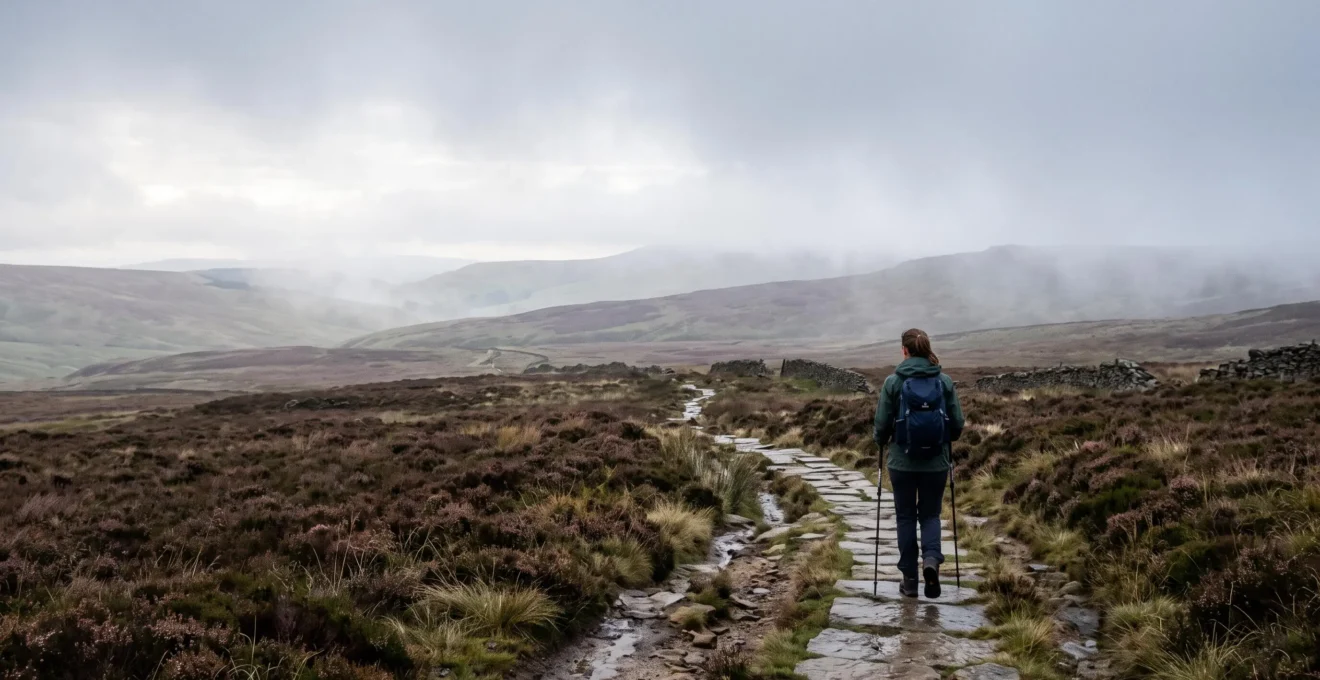
Practising true Leave No Trace in the UK goes beyond ‘pack it in, pack it out’; it requires understanding the hidden ecological cost of small, seemingly harmless actions in our uniquely pressured landscapes.
- Cumulative impacts from acts like building rock stacks or leaving food scraps cause significant, long-term damage to fragile habitats.
- Using camping stoves over campfires is a non-negotiable ethical choice for protecting irreplaceable UK ecosystems like peatlands.
Recommendation: Adopt a mindset of ‘ecological empathy,’ where every choice is weighed against its impact on the land, wildlife, and other people to become a true steward of the outdoors.
For those who love the wild spaces of the UK, from the rugged tors of Dartmoor to the sweeping glens of the Highlands, a common paradox emerges. We venture out to connect with pristine nature, yet our very presence can contribute to its degradation. We’ve all seen the signs: a discarded wrapper, a fire-scarred patch of grass, an over-worn trail branching into a muddy delta. It’s a problem that strikes at the heart of our passion for the outdoors.
Most of us are familiar with the basics of the Countryside Code and the seven core principles of Leave No Trace. We know to take our litter home, keep dogs under control, and leave gates as we find them. These rules are the essential foundation of responsible outdoor access. But they are often treated as a simple checklist, a set of restrictions to be followed without a deeper understanding of the reasoning behind them.
But what if the key to truly protecting these landscapes isn’t just following rules, but cultivating a deep sense of ‘ecological empathy’? This is the shift from being a visitor who tries not to cause trouble, to becoming a steward who actively understands and minimises their impact. It’s about grasping the profound, cumulative effect that seemingly insignificant actions—moving a stone, peeling an orange, choosing a toilet spot—have on the UK’s uniquely pressured and fragile ecosystems.
This guide will move beyond the simple ‘what’ and ‘what not’ to explore the critical ‘why’. We will deconstruct common mistakes, analyse the specific ecological consequences behind the principles, and equip you with the mindset to make ethical, low-impact decisions on every trip, ensuring the wild places we love remain wild for generations to come.
This article provides a comprehensive look into the core ethical considerations for responsible hiking and camping in the UK. The following sections break down specific, often misunderstood, aspects of Leave No Trace to build a deeper, more intuitive practice.
Summary: A Master Educator’s Guide to Leave No Trace Ethics for UK Hiking and Camping
- Why Do Small Acts Like Cairn-Building Cause Significant Ecological Harm Over Time?
- How to Manage Toilet Needs on Multi-Day Hikes Without Contaminating Water Sources?
- Campfires vs Camping Stoves: Which Aligns with Leave No Trace Ethics in the UK?
- The Leave No Trace Error That Makes Orange Peels and Banana Skins Problematic
- When Do High-Traffic Hiking Areas Demand More Rigorous Leave No Trace Practices?
- Why Do Some UK Nature Reserves Close Trails During Bird Nesting Season?
- Why Does Conventional Camping Produce 5x More Waste Than Everyday Urban Living?
- How to Achieve Zero-Waste Camping on Multi-Day Wilderness Trips?
Why Do Small Acts Like Cairn-Building Cause Significant Ecological Harm Over Time?
The impulse to build a small stack of stones, or a cairn, is an ancient one. It feels like a harmless, creative way to mark one’s passage. However, in the context of modern outdoor recreation, this seemingly innocent act is a prime example of damaging cumulative impact. Official cairns are vital navigational aids in the UK’s often mist-shrouded uplands; a proliferation of unofficial stacks can dangerously mislead hikers in poor visibility. But the damage runs deeper, into the very fabric of the ecosystem.
Consider the world beneath a single stone. It is a vital micro-habitat, a cool, damp refuge for lichens, mosses, insects, and other invertebrates that are the foundation of the mountain food web. Lifting that stone exposes this fragile community to the harsh sun and drying wind, effectively destroying it. When thousands of visitors each move a stone, the collective damage is immense. This disturbance, combined with foot traffic, contributes to soil destabilisation and erosion. On popular routes, this can be devastating, with studies showing erosion scars growing up to 30 metres wide on certain UK paths.
The principle of « Leave What You Find » is not just about refraining from taking souvenirs like fossils or interesting rocks. It is a call for ecological empathy—recognising that the landscape is a living, interconnected system. Resist the urge to build, stack, or alter. The most beautiful mark you can leave on the landscape is no mark at all. Observe historic features like Hadrian’s Wall or ancient stone circles from a distance, but never touch, move, or sit on these irreplaceable structures. True appreciation lies in observation, not interaction.
How to Manage Toilet Needs on Multi-Day Hikes Without Contaminating Water Sources?
Disposing of human waste properly is arguably the most critical and least glamorous aspect of Leave No Trace. Improper disposal is not just an aesthetic issue; it’s a serious health hazard. Pathogens from human faeces can contaminate water sources, spreading disease to both wildlife and other people. This is especially critical in the UK’s wet environment, where watercourses are abundant and the ground is often saturated, facilitating the transport of contaminants.
The key is to prevent contamination through distance and decomposition. As a strict rule, you must walk at least 30-60 metres from any water source, path, or campsite before selecting your spot. Once you’ve found a suitable location with rich, dark soil (which is full of decomposing organisms), you must dig a cathole 15-20cm deep. This depth is crucial; it’s deep enough to prevent animals from digging it up but shallow enough to remain within the topsoil layer where decomposition is fastest. After use, backfill the hole with the original soil and disguise it with leaf litter.
It’s vital to remember that toilet paper should be used sparingly and either packed out in a sealed bag or buried deep in the cathole. However, wet wipes and sanitary products must never be buried. They contain plastic and chemicals that do not break down and will persist in the soil for decades. They must always be packed out. Proper preparation is essential for managing this responsibility effectively.
Your Field Protocol for Outdoor Toileting
- Pack Your Kit: Always carry a small, lightweight trowel for digging, more toilet paper than you think you’ll need, and several sealable waste disposal bags (dog-poo bags or dedicated nappy sacks work well).
- Select Your Spot: Choose a location at least 30 metres (about 35-40 large paces) away from paths, open water, rivers, streams, and any buildings or shelters. Look for inconspicuous places where others are unlikely to walk or camp.
- Dig the Cathole: Use your trowel to dig a pit around 15cm deep and wide enough for your needs. The depth ensures waste is in the biologically active soil layer for faster decomposition.
- Use and Refill: After use, thoroughly backfill the hole with the earth you removed, packing it down firmly. Disguise the surface with natural materials like leaves or pine needles to return it to its original appearance.
- Pack Out Non-Compostables: Crucially, never bury wet wipes, tampons, sanitary pads, or nappies. These items must be sealed in a waste bag and carried out with you to be disposed of in a proper bin.
Campfires vs Camping Stoves: Which Aligns with Leave No Trace Ethics in the UK?
The romance of a campfire is powerful, but in the context of the UK’s fragile ecosystems, it is an outdated and damaging practice. The ethical and practical choice is always a modern camping stove. The risk of wildfire is the most obvious reason. With the UK’s fire season lengthening, a single stray ember can ignite a catastrophic blaze, particularly on moorland and in forests. Even a seemingly controlled fire can cause immense, lasting harm below the surface, especially on the UK’s globally important peatlands.
peatland fires are responsible for a disproportionately large amount of the carbon emissions caused by UK wildfires
– Dr Adam Pellegrini, University of Cambridge, via GreenFutures Exeter
Peat soils are rich in carbon. When they burn, they release vast quantities into the atmosphere. Research from the University of Cambridge highlights the scale of this issue, showing that an estimated 800,000 tonnes of carbon were released from UK peatland fires between 2001 and 2021. The ground is sterilised, leaving a black scar that can take centuries to recover. Furthermore, gathering wood for fires strips the environment of deadwood, a vital habitat for fungi, insects, and mosses, and a key component of nutrient cycling.
A camping stove, by contrast, is a self-contained, efficient, and zero-impact system. It leaves no scar, poses a negligible fire risk when used responsibly, and doesn’t deplete local resources. The following comparison makes the ethical calculus clear.
| Aspect | Open Campfire | Camping Stove |
|---|---|---|
| Carbon release risk | Peatland fires have emitted an estimated 800,000 tonnes of carbon UK-wide between 2001 and 2021 | Negligible; contained combustion with no ground ignition risk |
| Recovery time after damage | Burnt peat can take centuries to reaccumulate, unlike heather moorland which regrows in around two decades | No lasting scar on soil or vegetation |
| Fuel source | Relies on scarce deadwood that forms a vital habitat component in UK uplands | Uses portable gas or liquid fuel, no local resource extraction |
| Fire season exposure | UK’s natural-land fire season has lengthened from 1-4 months to 6-9 months since 2011 | Unaffected by fire season conditions |
The Leave No Trace Error That Makes Orange Peels and Banana Skins Problematic
« It’s natural, it will biodegrade. » This is one of the most common and damaging misconceptions in the outdoors. Tossing an apple core, banana skin, or orange peel into the undergrowth seems harmless, but it is a significant breach of Leave No Trace principles for several reasons. The core issue is that these items are not « natural » to most UK wild environments, especially sensitive upland and moorland habitats.
Firstly, decomposition rates are wildly overestimated. In the cool, acidic, and often waterlogged soils of a place like the Cairngorms or Snowdonia, a banana skin can take over two years to break down. An orange peel can take even longer. For the duration of that time, it is simply litter—an unsightly blight on the landscape that detracts from the sense of wildness for everyone who follows. This is the visual pollution aspect of the problem.
Secondly, and more critically, it habituates wildlife to human food. When an animal like a fox or a pine marten finds a discarded apple core, it learns to associate human scent with a food reward. This can lead to them becoming bolder, approaching campsites and people, and potentially becoming a nuisance or a danger. It also alters their natural foraging behaviours and can disrupt the delicate balance of the local ecosystem. Lastly, the nutrients and seeds from non-native fruits can alter the local soil chemistry and potentially introduce invasive species. The principle is simple: if you pack it in, you must pack it out. All of it. Food scraps belong in your rubbish bag, not on the trail.
When Do High-Traffic Hiking Areas Demand More Rigorous Leave No Trace Practices?
All outdoor spaces deserve our respect, but high-traffic « honeypot » areas demand an even more disciplined application of Leave No Trace principles. Think of the main paths up Snowdon, Ben Nevis, or Scafell Pike on a bank holiday weekend. The sheer volume of people concentrates impact to a degree that can overwhelm an ecosystem’s ability to recover. In these areas, there is simply no margin for error.
The reason for this heightened need for diligence is simple mathematics. The UK is a densely populated island. We share these landscapes with 272 people per square kilometre on average. Compare that to the vast wildernesses of Norway (14 people/km²) or Iceland (3.4 people/km²), and you begin to understand the unique pressure our wild places are under. An action that might have a negligible effect in a vast, remote wilderness has a significant, amplified effect when repeated hundreds or thousands of times a day in a popular National Park.
In high-use areas, certain principles become paramount. Staying on the designated path is non-negotiable. Cutting corners on a switchback or walking on the verge to avoid a muddy patch might seem trivial, but when multiplied by thousands, it kills vegetation and creates a wide, braided scar of erosion. The path itself becomes a « sacrifice corridor »—a line of concentrated impact designed to protect the fragile land on either side. Respecting that design is crucial.
Similarly, principles like « Be Considerate of Other Visitors » are magnified. Keeping noise to a minimum, managing your group effectively, and yielding to others allows everyone to enjoy the sense of peace they came for. In these busy places, your actions are not just about the environment; they are a fundamental part of maintaining a shared experience of quality and respect for all.
Why Do Some UK Nature Reserves Close Trails During Bird Nesting Season?
The Leave No Trace principle « Respect Wildlife » is often interpreted as not feeding animals or getting too close for a photo. However, one of its most important applications in the UK is minimising disturbance during the critical bird nesting season, which typically runs from March to August. Many beloved species of British birds, particularly in moorland, heathland, and coastal areas, are ground-nesters. This makes them exceptionally vulnerable to human presence.
Species like the Curlew, Lapwing, Skylark, and Nightjar build their nests directly on the ground, often relying on camouflage for protection. When a hiker, and especially their off-leash dog, walks too close to a nest, the parent bird is forced to flee. This seemingly brief disturbance has severe consequences. It exposes the eggs or chicks to the cold, which can be fatal in minutes, and it reveals the nest’s location to predators like crows and foxes, who are quick to take advantage.
Even if you don’t see a nest, your presence can be enough to cause a bird to abandon it permanently. Repeated disturbance in an area can lead to total breeding failure for that season. This is why organisations like the RSPB and National Trust will sometimes close or reroute paths during this sensitive period. It’s not about being restrictive; it’s a vital conservation measure to give these vulnerable populations a chance to survive. Adhering to signage, keeping dogs on a short lead, and sticking strictly to marked paths during this time is an act of proactive stewardship and ecological empathy.
Why Does Conventional Camping Produce So Much Waste?
It’s an ironic truth that an activity designed to connect us with nature can often generate a surprising amount of waste. While the specific figure can vary, conventional camping often leads to more rubbish than our daily lives at home due to a reliance on convenience and single-use items. The root of the problem lies in the temporary, self-contained nature of a camping trip, which encourages pre-packaged solutions.
The primary culprit is food packaging. Supermarket aisles are filled with « convenient » options for camping: individually wrapped portions, boil-in-the-bag meals, and single-serving sachets of sauce or coffee. Each of these creates a piece of non-recyclable plastic or foil waste. When you pack for a multi-day trip, this packaging can quickly mount up, filling your pack with a bulky, lightweight collection of rubbish that you are then responsible for carrying out.
Another major source is disposable equipment. Single-use gas canisters that can’t be easily recycled, cheap plastic cutlery, paper plates, and disposable barbecues all contribute to the problem. These items are often marketed as convenient for short trips but represent a « buy, use, discard » mentality that is fundamentally at odds with the Leave No Trace ethos. Without the sorting and recycling infrastructure of a home or city, all this waste often ends up in a single bag, destined for landfill. The challenge is to break this cycle of convenience-driven consumption before you even leave the house.
Key Takeaways
- True Leave No Trace is not a checklist, but a mindset of ‘ecological empathy’—understanding the ‘why’ behind every action.
- The UK’s high population density and fragile ecosystems like peatlands mean that small, cumulative impacts have significant and long-lasting consequences.
- The most ethical, responsible, and sustainable choice is always to plan ahead to minimise your footprint, from using a stove instead of a fire to packing out every single item you bring in.
How to Achieve Zero-Waste Camping on Multi-Day Wilderness Trips?
Achieving a truly zero-waste camping trip is an aspirational goal, but dramatically reducing your waste to almost nothing is a practical and achievable objective. It requires a fundamental shift in thinking, moving the effort from « packing out rubbish » to « not creating it in the first place. » This process of radical pre-trip planning is the cornerstone of advanced Leave No Trace practice and the ultimate expression of ethical stewardship.
The transformation begins in your kitchen, not at the trailhead. Instead of buying pre-packaged trail food, buy ingredients in bulk and repackage them at home. Decant pasta, rice, oats, and trail mix from their commercial packaging into reusable silicone bags, small cloth sacks, or lightweight screw-top containers. This single step eliminates the vast majority of plastic waste from a trip. Plan your meals precisely to avoid leftovers and consider dehydrated or freeze-dried meals from companies that use compostable or recyclable packaging.
This philosophy extends to all your gear. Invest in durable, multi-use items: a metal spork instead of plastic cutlery, a reusable water bottle with a filter instead of buying bottled water, and a good quality flask instead of disposable cups. Use a refillable fuel canister system if available. For hygiene, switch from disposable wipes to a small, quick-drying flannel or pack towel. The goal is to create a self-sufficient kit where nearly every item is designed to return home with you, be cleaned, and be used again on the next adventure. This is the circular economy of the ethical camper.
By adopting this mindset of proactive planning and ecological empathy, you transform your relationship with the outdoors. You become more than a visitor; you become a guardian. Begin today to implement these strategies, and take pride in knowing that the only traces you leave behind are your footprints on the path.