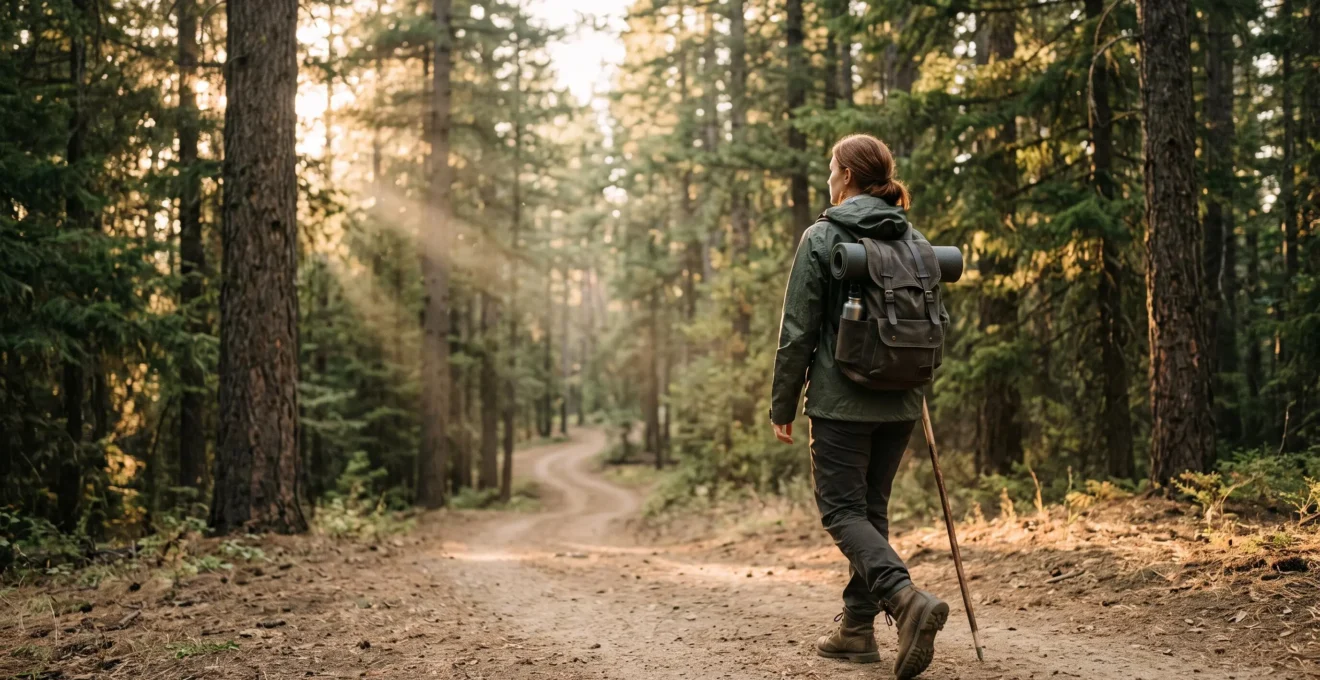
Feeling exhausted halfway through a beautiful walk is a common frustration that pushes many hikers to quit. The solution isn’t to simply « get fitter » or force a rigid pace. This guide reveals how to shift your mindset from a battle against the trail to a dialogue with your body. By learning to interpret your own bio-feedback, you can discover a sustainable flow that matches your personal energy levels, turning burnout into lasting enjoyment on the trail.
There’s a familiar story that plays out on trails across the UK every weekend. It begins with trailhead excitement, a rush of fresh air, and a brisk pace. But an hour or two later, the story changes. Breath becomes short, legs feel like lead, and the joy of the walk is replaced by a grim determination to just make it back to the car. You might be keeping up with your group, but you’re not present; you’re just surviving. For many hikers between 30 and 55, this cycle of boom and bust feels like a personal failing, a sign that they’re simply not « cut out for it. »
Conventional wisdom offers blunt solutions: follow a rigid pacing formula like Naismith’s Rule, or simply « push through the pain. » This advice, however, ignores the most sophisticated pacing tool you own: your own body. Imposing an external, one-size-fits-all rhythm on a unique biological system is like trying to fit a square peg in a round hole. It creates friction, drains energy, and ultimately leads to burnout, not better performance.
But what if the true key to all-day energy isn’t about ignoring your body’s signals, but about learning to listen to them? What if you could find a sustainable flow, a personal rhythm where your pace feels effortless and energising? This is not about hiking slower; it’s about hiking smarter. It’s about shifting from a monologue of commands to a dialogue with your body, using its real-time feedback to manage your energy with precision.
This guide will walk you through the practical steps to discover that personal rhythm. We will explore why the « go fast » approach is so draining, how to strategically plan for energy renewal, and how to match your hiking style to your true goals. By the end, you will have a new framework for approaching the trail—one that prioritises sustainable enjoyment and leaves you feeling revitalised, not ruined.
To help you navigate this new approach, this article is structured to build your understanding step-by-step. The following sections will provide a complete roadmap, from identifying common mistakes to mastering advanced techniques for even the most challenging hikes.
Summary: How to Find Your Personal Day Hiking Rhythm Without Burning Out?
- Why Does Hiking Too Fast Ruin 80% of the Day Hiking Experience?
- How to Plan Rest Stops on a 6-Hour Day Hike to Maintain Steady Energy?
- Fitness Hiking vs Leisurely Rambling: Which Day Hiking Style Matches Your Goals?
- The Day Hiking Error That Causes 50% of Beginners to Quit Within 6 Months
- When Should You Shift from Casual Strolls to Planned Day Hiking Routes?
- The Steep Ascent Mistake That Exhausts You 70% Faster Than Necessary
- Why Do Packed Hiking Itineraries Leave 70% of Travelers Exhausted Rather Than Energized?
- How to Train Your Body for Hikes with 1000m+ Elevation Gain in a Single Day?
Why Does Hiking Too Fast Ruin 80% of the Day Hiking Experience?
The single biggest mistake most day hikers make happens within the first 15 minutes of leaving the car park. Fresh legs and trailhead excitement create a surge of adrenaline, leading to an unsustainably fast start. Your body enters an anaerobic state, burning through its limited, quick-access energy stores (glycogen) far too rapidly. By the time the first major hill arrives, your account is already overdrawn. The rest of the hike becomes a painful exercise in debt management, leading to exhaustion, muscle soreness, and a complete loss of enjoyment.
This « trailhead trap » creates a false sense of what your pace should be. The initial burst feels good, but it’s a physiological lie. True endurance is built in the aerobic zone, where your body efficiently uses fat and oxygen for fuel—a nearly limitless resource. The goal isn’t to avoid effort, but to manage it. This requires learning to be comfortable with a pace that feels « too slow » at the beginning, preserving your energy for when you actually need it.
How do you know if you’re starting too fast? The most effective tool for bio-feedback pacing is the conversation test. You should be able to hold a conversation without gasping for breath. If you can only manage one or two words between breaths, you are pushing too hard and burning your reserves. On climbs, a common mistake is to try and maintain pace by taking long, powerful strides. Instead, you should shorten your steps; using more small steps consumes significantly less energy for the same elevation gain. This deliberate, controlled pace keeps you in your aerobic zone, ensuring you finish the hike feeling accomplished, not defeated.
How to Plan Rest Stops on a 6-Hour Day Hike to Maintain Steady Energy?
The traditional advice is to take a break every hour. While a decent rule of thumb, it misses the true purpose of a rest stop. A break isn’t just about stopping; it’s an opportunity for a conscious « energy audit. » Instead of hiking until you’re forced to stop by fatigue, you should plan proactive pauses to check in with your body, refuel, and make adjustments. This transforms breaks from a sign of weakness into a strategic tool for endurance.
For a six-hour hike, a proactive rhythm might involve a brief, 5-10 minute stop every 45 to 60 minutes. During this pause, don’t just collapse onto a rock. Use it as a checklist:
- Hydrate: Take several sips of water, even if you don’t feel thirsty. Thirst is a delayed signal of dehydration.
- Fuel: Eat a small, easily digestible snack like a handful of nuts or a piece of fruit to keep your blood sugar stable.
- Assess: How are your legs feeling? Are any hotspots developing on your feet? How is your breathing? This is your bio-feedback.
- Adjust: Based on your assessment, decide if your current pace is sustainable. If you’re already feeling taxed, plan to slow down on the next leg.
It’s also crucial to start the hike itself at a deliberate, warm-up pace, slightly slower than your normal walking speed. This allows your muscles, tendons, and cardiovascular system to adapt gradually. When you encounter hills, remember to shorten your steps and slow your pace. Trying to maintain your flat-ground speed uphill is a fast track to exhaustion. These planned energy audits and pace adjustments prevent the deep fatigue that long, reactive breaks can’t fix. They are the secret to maintaining a steady, consistent energy level from the first step to the last.
Fitness Hiking vs Leisurely Rambling: Which Day Hiking Style Matches Your Goals?
Not all hikes are created equal, because not all hikers have the same objective. The frustration many feel on the trail stems from a mismatch between their hiking style and their personal goal. Are you out there to achieve a fitness milestone, or are you seeking a mindful escape and connection with nature? Answering this question honestly is the first step to finding your rhythm. This internal objective is your « Why Compass, » and it should dictate your pace, not the other way around.
As the outdoor publication The Trek wisely notes, « If you know your why going into the trail, you’ll know when that why has been fulfilled. » This is profoundly true for day hiking.
- Fitness Hiking: If your « why » is to increase cardiovascular health, train for a bigger objective, or push your physical limits, your style will be more structured. You’ll focus on maintaining a consistent heart rate in your target zone, tackling elevation gain as a challenge, and using your watch to track metrics like speed and distance. Breaks are functional—for refuelling and brief recovery. The satisfaction comes from the physical achievement.
- Leisurely Rambling: If your « why » is to de-stress, enjoy the scenery, spend quality time with companions, or feel a connection to the environment, your pace should be entirely different. The rhythm is dictated by curiosity, not a clock. You stop to admire a view, identify a wildflower, or simply listen to the birdsong. The pace is naturally varied, and the satisfaction is experiential and emotional.
To find your joy in hiking, you must honour your personal « Why Compass. » There is no right or wrong style, but forcing a fitness pace on a day you truly need a leisurely ramble is a recipe for disappointment. The hiker who feels a deep, calm contentment on the trail has successfully aligned their pace with their purpose.
The key is to define your goal before you even lace up your boots. Acknowledging whether you’re on a mission or on a meander allows you to set realistic expectations and embrace a rhythm that will energize, not exhaust, you. When your actions on the trail match your inner motivation, burnout becomes a distant memory.
The Day Hiking Error That Causes 50% of Beginners to Quit Within 6 Months
The most common and demoralising error for beginners is a fundamental mismatch between ambition and preparation. Fuelled by inspiring images of epic ridgelines and summit views on social media, newcomers often jump straight to challenging, full-day hikes without first building a foundation. This « too much, too soon » approach almost invariably leads to a miserable experience of exhaustion, pain, and self-doubt, causing many to abandon hiking altogether.
While comprehensive data on day-hiking dropout rates is hard to come by, the world of long-distance hiking provides a stark warning about the dangers of inexperience. A recent survey of Appalachian Trail thru-hikers, for instance, found that nearly 50% of aspiring thru-hikers had little to no prior backpacking experience before attempting their multi-month journey. This gap between dream and reality is a primary driver of failure on long trails, and the principle holds true for day hiking. Attempting a 10-mile mountain route with 1000m of ascent when your longest walk has been a 3-mile loop in a local park is setting yourself up for failure.
The body and mind need time to adapt. Tendons need strengthening, muscles need to build endurance, and most importantly, you need to learn your body’s unique signals. This education doesn’t happen on one gruelling, ambition-fueled hike. It happens over dozens of shorter, more manageable outings. The error isn’t having ambition; it’s the lack of a progressive training ladder. You wouldn’t try to run a marathon without first running a 5k, and the same logic applies to hiking. By skipping the foundational steps, beginners rob themselves of the small victories and gradual adaptations that build both physical capacity and mental confidence.
When Should You Shift from Casual Strolls to Planned Day Hiking Routes?
The journey into hiking is a gradual one, and knowing when to level up is key to staying motivated without getting overwhelmed. The transition from casual, spontaneous strolls in local parks to intentionally planned day hikes on designated trails is a natural progression. It’s not a move you should force, but rather one you make when your body and mind start asking for a greater challenge. Listening for these signals ensures you’re ready for the next step.
This shift is less about a specific date on a calendar and more about recognising a pattern of readiness. Your body will tell you when it’s time to seek out routes with more structure, distance, and elevation. Instead of guessing, you can look for clear indicators that you’ve outgrown your current routine and are prepared to embrace more demanding adventures. The goal is to step up when you feel confident and capable, not when you feel pressured.
So, how do you know you’re ready to move beyond your local woods and start tackling the footpaths of the Peak District or the Lake District? Here are the signs to watch for. If you find yourself nodding along to most of these points, it’s a strong indication that you’re ready to start planning your first proper day hike.
Your Checklist: Signs You’re Ready for Structured Day Hikes
- Your current walks feel too easy: Casual walks under 5 miles with minimal hills start to feel effortless. You finish with plenty of energy left in the tank, seeking a greater sense of physical accomplishment.
- You start seeking planning tools: You find yourself downloading apps like AllTrails or OS Maps, or filtering websites for specific trail lengths and difficulty ratings. Your mindset shifts from « let’s go for a walk » to « let’s choose a route. »
- You crave a specific objective: The idea of reaching a particular summit, viewpoint, or landmark becomes a primary motivator. You’re no longer content just to wander; you want to achieve a destination.
- You become gear-curious: You start researching proper hiking boots, waterproof jackets, or daypacks. This interest in specialised equipment is a sign you’re thinking about tackling more demanding conditions and terrain.
- You want to build better habits: You observe experienced hikers moving steadily on steep terrain and become interested in learning the techniques they use, such as structured pacing and using trekking poles effectively.
The Steep Ascent Mistake That Exhausts You 70% Faster Than Necessary
The most energy-sapping mistake hikers make on steep inclines is trying to power through with brute force. They treat an ascent like a sprint, taking big, lunging steps and pushing off forcefully. This approach throws the body into an anaerobic state, a high-intensity mode that can’t be sustained. As hiking resource Wildr.ca explains, « Your body cannot work anaerobically for very long and will force you to stop. » This leads to a frustrating cycle of pushing for 30 seconds, then gasping for air for a minute, making ascents feel like a form of punishment.
The secret to effortless climbing lies in a counter-intuitive technique used by mountaineers and seasoned hikers: the Rest Step. It’s a method of rhythmic walking that builds a tiny moment of recovery into every single step. While it feels almost negligibly slow at first, the energy savings compound dramatically over hundreds or thousands of feet of elevation gain. It is the ultimate expression of « slow is smooth, and smooth is fast. » This technique is a perfect example of a planned « micro-recovery. »
The Rest Step transforms your skeleton into the primary load-bearer, giving your muscles a split-second break. Here’s how to perform it correctly, as outlined by experts at Backpacker Magazine:
To master this technique, you must move deliberately, not forcefully.
- Step and Lock: As you take a step uphill, transfer all your weight onto your downhill leg and straighten it, locking the knee. For a brief moment, your bones are supporting your weight, not your muscles.
- Relax and Swing: While your downhill leg is locked and bearing your weight, your uphill leg can swing forward and be placed for the next step with minimal effort. Your muscles get a micro-second of rest.
- Shift and Repeat: Shift your weight onto your new uphill foot, step past it with your other foot, and immediately lock that back knee to repeat the process. The rhythm is: step, lock, rest; step, lock, rest.
This technique keeps your heart rate down and your body in an efficient, aerobic state. It’s the difference between fighting the mountain and flowing with it.
Why Do Packed Hiking Itineraries Leave 70% of Travelers Exhausted Rather Than Energized?
In our goal-oriented culture, it’s easy to treat a hiking itinerary like a project plan. We create a rigid checklist of summits, viewpoints, and photo spots, and then race against the clock to tick them all off. This turns the hike from a rejuvenating experience into a stressful commute. A packed, inflexible itinerary is one of the surest ways to end a day feeling drained and disappointed, regardless of how many beautiful places you « saw. »
The problem with a rigid plan is that it leaves no room for the realities of the trail—or the realities of your own body. It doesn’t account for an unexpected change in weather, a trail that’s more difficult than described, or simply a day where your energy levels are lower than usual. When you are fixated on « completing the mission, » you start making poor decisions. You might skip necessary breaks, push your pace beyond a sustainable level, or ignore early signs of fatigue or injury, all in service of a plan that exists only on paper.
A healthier approach is to view your itinerary as a set of possibilities, not a list of obligations. Plan a primary objective, but also identify shorter, alternative routes or earlier turnaround points. This gives you the flexibility to make a wise decision on the trail based on real-time information—the weather, the time, and your own energy audit. This mindset shift redefines success. Success is no longer « bagging the peak, » but having a safe, enjoyable day outdoors and returning home feeling good. As hiking writer Ally Watson puts it, « Things happen, and being safe and getting home are the real end goal. »
Embracing a flexible itinerary is liberating. It allows you to linger at a beautiful viewpoint without feeling guilty, or to turn back before you’re exhausted and still feel a sense of accomplishment. It replaces the pressure of performance with the freedom of experience, ensuring the trail energizes your spirit rather than just exhausting your body.
Key Takeaways
- Your optimal pace is personal and dynamic; use the « conversation test » as your primary bio-feedback tool to stay in a sustainable aerobic zone.
- Define your « Why Compass » before each hike. Aligning your pace with your goal—whether it’s fitness or mindful rambling—is crucial for enjoyment.
- Embrace energy-saving techniques like the Rest Step for ascents. Efficiency, not brute force, is the key to mastering elevation and preventing burnout.
How to Train Your Body for Hikes with 1000m+ Elevation Gain in a Single Day?
Tackling hikes with significant elevation gain, like those involving 1000 metres or more, is a rewarding challenge that requires more than just willpower. It demands specific, intentional training. However, effective training isn’t simply about hammering your body with high-intensity workouts. It’s about teaching your body to be more efficient and resilient, building the capacity to maintain a sustainable flow even when the terrain gets tough.
The foundation of this training is building a strong aerobic base. This is developed through consistency and volume, not just intensity. Long, steady walks or hikes at a conversational pace are your best tool. These sessions train your body to efficiently burn fat for fuel, improve oxygen delivery to your muscles, and build endurance in your connective tissues. Incorporate one longer walk into your weekly routine, gradually increasing its duration or the rolling elevation of the route.
Secondly, targeted strength training is essential for stability and injury prevention. The biggest demands on big mountain days are not just on your legs, but on your core and stabiliser muscles. Simple bodyweight exercises done two to three times a week can make a huge difference. Focus on:
- Single-leg exercises: Lunges and step-ups build balanced leg strength and mimic the motion of hiking uphill.
- Glute strengthening: Squats and glute bridges power your ascents and protect your lower back.
- Core work: Planks and bird-dog exercises create a stable torso, which improves balance and reduces energy waste on uneven terrain.
Finally, your training must include practice. Use your shorter, local hikes as a laboratory. Practice the Rest Step on every incline. Conduct conscious energy audits every 30 minutes. Experiment with different snack types to see what gives you the best sustained energy. Training for big hikes is as much about embedding these smart habits as it is about building physical strength. It’s this holistic combination of base fitness, functional strength, and practiced technique that prepares you to confidently and enjoyably conquer a 1000m+ day.
Your journey to becoming a more resilient and energised hiker begins not on a distant mountain, but on your very next walk. Start applying these principles of listening to your body, honouring your personal « why, » and moving with efficiency today, and begin the dialogue that will transform your experience on the trail.