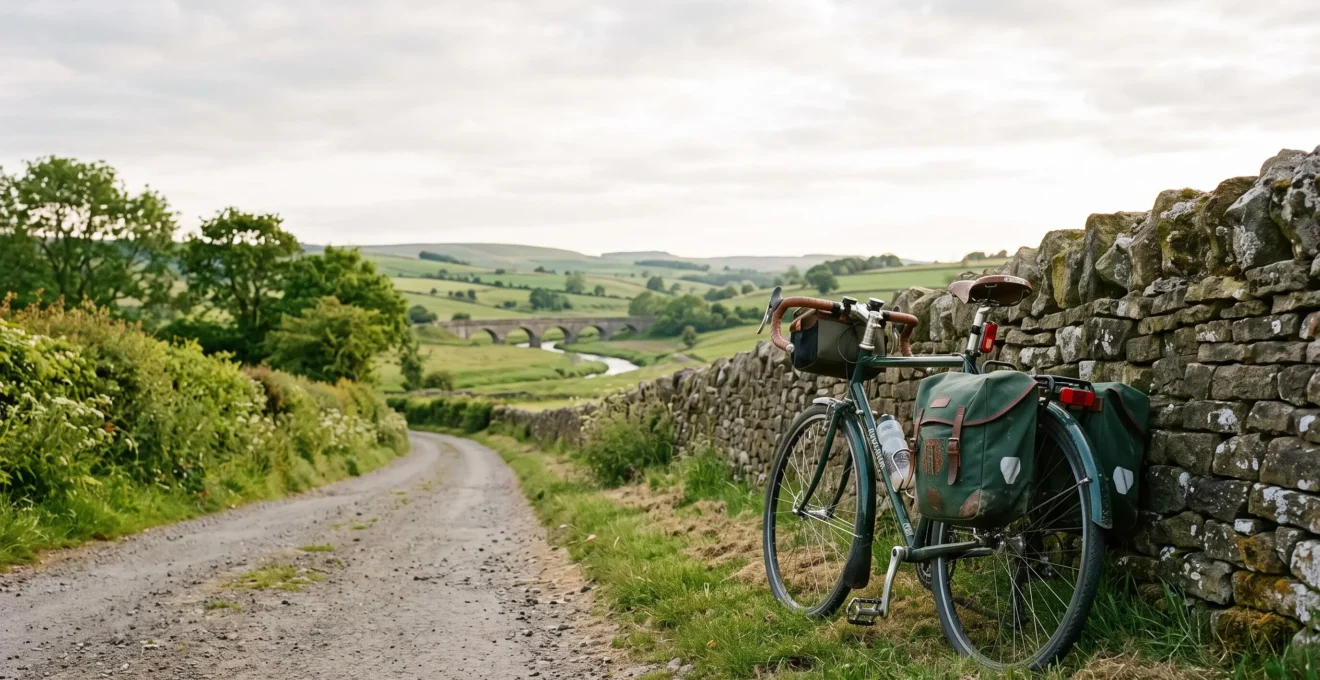
The secret to a truly memorable UK cycle tour isn’t covering more miles, but experiencing more within each mile by deliberately slowing down.
- Shorter daily distances (around 30 miles) transform a physical challenge into a rich journey of discovery.
- Planning with tools like the Sustrans network creates « confidence corridors » that eliminate route anxiety.
- Embracing comfort, from hotel stays to e-bikes, makes touring accessible and sustainable for all ages and fitness levels.
Recommendation: Ditch the pressure of a high-mileage schedule and plan your next tour around points of interest, not just endpoints.
The dream of exploring the UK’s countryside by bicycle is a powerful one: rolling hills, charming villages, and the freedom of the open road. Yet, for many, the reality of planning a multi-day tour is overshadowed by a nagging pressure to perform—to cover impressive distances and stick to a rigid, demanding schedule. The cycling world often celebrates speed and endurance, setting a standard that can feel more like a race than a holiday.
This approach often stems from a common misconception about what makes a journey rewarding. We’re conditioned to think in terms of destinations and daily mileage targets. But what if the true essence of cycle touring lies not in the distance covered, but in the richness of the experience gained along the way? What if the key to unlocking the most profound memories was not to push harder, but to pedal slower?
This guide challenges the « more is better » mindset. We will explore a philosophy of relaxed, leisure-paced touring where the goal is not to conquer the map, but to connect with it. We’ll show you how to shift your focus from a test of endurance to an art of observation, transforming your bicycle into a vehicle for genuine discovery. By recalibrating your pace, you can create a journey that energises rather than exhausts, leaving you with lasting memories instead of just sore muscles.
This article provides a complete roadmap for planning your own relaxed tour. We will cover the philosophy behind slow cycling, the practical tools for safe route planning, accommodation choices, and how to adopt this mindset for a truly sustainable and joyful travel experience.
Summary: Your Guide to Planning Joyful, Unhurried UK Cycle Adventures
- Why Do Leisure Cycle Tours with 30-Mile Days Create Better Memories Than 70-Mile Rushes?
- How to Use Sustrans Routes and Quiet Lanes to Plan Safe Recreational Cycling Tours?
- Hotel-to-Hotel Cycling vs Camping Bike Tours: Which Suits Recreational Riders Over 50?
- The Recreational Cycling Error That Causes 40% of Multi-Day Tours to Abort Early
- When Should Older or Less Fit Cyclists Choose E-Bikes for Leisure Tours?
- Why Do Packed Hiking Itineraries Leave 70% of Travelers Exhausted Rather Than Energized?
- How to Create Car-Free Mobility Systems Using Bike Plus Train Combinations?
- How to Adopt Low-Carbon Mobility for Both Local Commuting and Holiday Travel?
Why Do Leisure Cycle Tours with 30-Mile Days Create Better Memories Than 70-Mile Rushes?
In the world of cycle touring, there’s an unwritten rule that a « good » day involves covering 50 to 70 miles. This benchmark, born from a focus on athletic achievement, turns the journey into a race against the clock. The day becomes a blur of tarmac, with every stop for a photo or a cup of tea shadowed by the pressure of the remaining mileage. You see the landscape, but you don’t truly experience it. This is the core reason why, as the Bicycle Touring Pro editorial team notes, planning to cycle too far each day is the number one reason most self-supported bicycle tours are abandoned.
Now, imagine a different approach: a day built around a leisurely 30 miles. This isn’t a « short » day; it’s a « rich » day. The pressure evaporates. A morning of gentle pedalling can be followed by a long pub lunch without a single glance at your watch. You have time to explore that intriguing side-road, visit the local museum you just passed, or simply sit on a bench and absorb the view. This is the concept of Experience Density—packing more memorable moments, not more miles, into your day.
A 30-mile pace transforms your bicycle from a simple mode of transport into a tool for discovery. It allows your travel speed to match your observation speed. You start to notice the details: the architecture of the stone walls, the names on the village war memorial, the scent from a local bakery. You have the mental and physical energy to engage with your surroundings, turning a passive viewing into an active participation. This shift in mindset from « destination-focused » to « journey-focused » is the fundamental secret to a tour that nourishes the soul.
This approach isn’t about a lack of ambition; it’s about redefining ambition. The goal is no longer to conquer a route, but to be captivated by it.
As the image suggests, true touring is about embracing the fork in the road. A shorter daily distance gives you the freedom to choose the more interesting path, not just the most direct one. It’s the difference between a trip you have to recover from and an adventure that truly recharges you, creating stories you’ll want to retell for years.
How to Use Sustrans Routes and Quiet Lanes to Plan Safe Recreational Cycling Tours?
Embracing a slower pace is one thing; knowing where to find quiet, safe, and scenic roads is another. The key to a stress-free recreational tour in the UK is to build your route using what can be called « Confidence Corridors ». These are routes planned primarily on well-signed, low-traffic infrastructure, removing the anxiety of navigating busy A-roads and allowing your mind to focus on the pleasure of the ride. The backbone of this system is the National Cycle Network (NCN), managed by the walking and cycling charity Sustrans.
The NCN is a vast web of routes crisscrossing the country. To plan effectively, it’s crucial to understand its scale and structure. As of recent data, the network has created a staggering 12,763 miles of signed cycle routes throughout the United Kingdom, a significant portion of which is entirely traffic-free. Using the NCN as your primary planning tool means you’re following paths that have been specifically chosen and developed for cyclists.
However, not all cycle routes are created equal. It’s important to distinguish between the National Cycle Network (NCN) and the various Regional Cycle Networks (RCN). This distinction is vital for a smooth and predictable journey, especially when planning from afar.
The following table breaks down the key differences, helping you decide which routes to prioritise for a truly relaxed tour.
| Route Type | Signage | Maintenance Level | Suitability for Relaxed Tours |
|---|---|---|---|
| NCN (National Cycle Network) | Numbered sign in a red box | Maintained and updated by Sustrans/Walk Wheel Cycle Trust | High — most consistent surface quality and signage |
| RCN (Regional Cycle Network) | Numbered sign in a blue box | Not maintained or updated by Sustrans | Variable — requires extra digital reconnaissance before relying on it |
For maximum peace of mind, prioritise NCN routes in your planning. Use digital mapping tools like the Sustrans website or Komoot to trace these red-signed routes, then link them together using carefully selected ‘quiet lanes’—the unclassified rural roads that often see more tractors than cars. By building your tour around these trusted infrastructure elements, you spend less time worrying about traffic and more time enjoying the ride.
Hotel-to-Hotel Cycling vs Camping Bike Tours: Which Suits Recreational Riders Over 50?
Once your leisurely pace is set and your route is planned, the next big decision is accommodation. For recreational riders, particularly those over 50, this choice significantly impacts the physical and mental load of the tour. The romantic image of wild camping is appealing, but the reality of carrying a full set of gear—tent, sleeping bag, cooking equipment—adds considerable weight and effort. This is where the concept of « riding unloaded » becomes a game-changer.
Opting for hotel-to-hotel or B&B touring allows you to travel light, carrying only what you need for the day. This reduces the physical strain, especially on hills, and makes the cycling itself far more enjoyable. After a day in the saddle, the promise of a comfortable bed, a hot shower, and a meal you don’t have to cook yourself provides a powerful psychological boost. It transforms the end of the day from a chore (setting up camp) into a reward, ensuring you’re properly rested and recovered for the next day’s adventure.
While camping offers maximum flexibility, the comfort and recovery offered by fixed accommodation are often a better fit for a relaxed, multi-day tour. The key is to find the right balance between the physical load you’re willing to carry and the level of pre-planning you’re comfortable with.
This table outlines the trade-offs between different accommodation styles, highlighting why hotels and B&Bs are often the preferred choice for maximising comfort on a leisure tour.
| Accommodation Type | Physical/Gear Load | Flexibility |
|---|---|---|
| Wild camping | High (full gear carried) | High where legal |
| Commercial campgrounds | High (full gear carried) | Medium — booking helpful in peak season |
| Hostels / Warmshowers hosts | Low-medium | Medium |
| Hotels / motels | Low | Lower — often needs advance booking |
To get the best of both worlds—the freedom of self-guided cycling and the comfort of pre-booked accommodation—many riders utilise support services. Opting for a tour operator that provides luggage transfer is the ultimate way to ride unloaded. Each morning, you leave your bags at reception, and they are magically waiting for you at your next stop. This single service can transform a tour from a challenging expedition into a truly luxurious and relaxing holiday.
The Recreational Cycling Error That Causes 40% of Multi-Day Tours to Abort Early
The most common and devastating mistake in planning a multi-day tour has nothing to do with equipment or fitness, and everything to do with psychology. It’s the « planning fallacy »: our very human tendency to be overly optimistic about how much we can achieve in a given time. We sit at our desks, feeling fresh and strong, and map out a series of 40- or 50-mile days, forgetting to account for headwinds, unexpected hills, fatigue, and the simple wear and tear on our bodies. This overestimation is the primary reason why so many well-intentioned tours are cut short.
The critical factor that optimistic planning overlooks is contact point fatigue. This refers to the discomfort and pain that develops in the three places where your body meets the bike: your hands on the handlebars, your feet on the pedals, and, most importantly, your backside on the saddle. This isn’t about muscular fitness; it’s about conditioning your skin and soft tissues to the sustained pressure and friction of long hours of cycling. This conditioning simply cannot be rushed.
An aborted tour due to unbearable saddle soreness or numb hands is a deeply frustrating experience, yet it is almost entirely preventable. The solution is not to « tough it out » but to plan a progressive ramp-up that allows your body to adapt. Starting a multi-day tour with your longest, most ambitious day is a recipe for failure. Instead, you must ease your body into the rhythm of the journey.
The antidote to the planning fallacy is a dose of realism and a structured, gradual start. Before embarking on a week-long tour, test your setup and conditioning with an overnight trip. More importantly, structure the first few days of your main tour to build mileage progressively, listening to your body’s feedback rather than slavishly following a pre-written plan.
Your Pre-Tour Conditioning Checklist
- Start Small: Begin with a simple overnight trip on your fully-loaded touring bike to test your setup and identify any immediate comfort issues.
- Day One – The Shakedown: Plan your first day’s ride to be deliberately short, around 10 to 20 miles. The goal is to settle in, not set records.
- Day Two – The Extension: If day one felt good, increase the distance to about 30 miles. Pay close attention to how your contact points feel at the end of the day.
- Day Three – Finding Your Rhythm: Aim for 35 to 40 miles. By now, your body is starting to adapt, and you’re getting a realistic sense of your sustainable daily pace.
- Adapt and Adjust: After day three, adjust the rest of your tour’s daily mileage based on how you actually feel, not on the original spreadsheet. Be prepared to shorten or lengthen days as needed.
When Should Older or Less Fit Cyclists Choose E-Bikes for Leisure Tours?
For years, the mere mention of an electric bicycle in touring circles might have been met with a sniff of disdain. But the conversation has changed dramatically. E-bikes are no longer seen as « cheating » but as a revolutionary tool for accessibility and enjoyment, particularly for leisure touring. They are the great leveller, flattening hills and laughing in the face of headwinds, making the joy of multi-day cycling available to a much wider audience.
The question is no longer *if* e-bikes are suitable for touring, but *when* they become the smartest choice. For older riders, those recovering from injury, or simply anyone who isn’t at their peak physical fitness, an e-bike can be the difference between staying at home and embarking on an unforgettable adventure. The statistics are telling, with one UK retailer noting that around 40% of their customers are over 50 years old. This highlights a significant demographic that is embracing the technology to continue their passion for cycling.
A key academic study on UK e-bike users provides powerful insight. It found that for many older cyclists, e-bikes are not about making cycling easy, but about making it possible. The electric assist helps to neutralise the two biggest barriers to continued participation: reduced cardiovascular capacity and joint pain. As the researchers highlighted in their findings published in the Journal of Transport & Health, the technology offers a profound benefit.
e-bikes had offered an opportunity to extend their « cycling life »… allowed these respondents to « keep up » with younger and more energetic members of the group
– Study authors, Journal of Transport & Health
The decision to use an e-bike is a personal one, but it should be based on your goals. If your goal is a relaxed, enjoyable tour where you can focus on the scenery and arrive at your hotel with enough energy to explore the town, an e-bike is an excellent choice. It allows you to take on more ambitious routes with confidence and, crucially, ensures that a group of mixed-ability riders can all share the journey together, with no one being left behind.
Why Do Packed Hiking Itineraries Leave 70% of Travelers Exhausted Rather Than Energized?
The pressure to « do it all » is not unique to cycle touring. Consider the world of multi-day hiking, where walkers often plan packed itineraries, aiming to tick off famous peaks and long-distance trails with military precision. They arrive with a spreadsheet of daily distances, elevation goals, and scheduled viewpoints. Yet, so often, they end their trip not with a sense of accomplishment, but with profound exhaustion and a feeling that they « missed something. » The experience becomes a box-ticking exercise, the joy of the journey lost to the tyranny of the schedule.
This phenomenon, which we can call « itinerary fatigue, » is the direct result of prioritising achievement over experience. It stems from the same mindset that pushes cyclists to tackle 70-mile days. The focus is on the summit, not the wildflowers on the path to get there. The goal is the end of the trail, not the spontaneous conversation with a fellow hiker met along the way. When the plan is too rigid, there is no room for serendipity, the unexpected magic that forms the most cherished travel memories.
This principle is universal to slow travel. Whether you are on foot, on a bike, or in a canoe, the moment the schedule becomes more important than the experience, the adventure begins to lose its soul. A truly restorative journey requires slack in the system. It needs unstructured time, the freedom to linger, and the permission to change the plan based on how you feel or what you discover. It’s about building an itinerary that includes time for spontaneity.
The lesson for the leisure cyclist is clear: your itinerary should be a guide, not a master. Just as a hiker who discovers a beautiful, secluded lake might choose to abandon their planned route to spend the afternoon there, a cyclist should feel empowered to spend two hours at a fascinating local craft shop without feeling guilty about « falling behind schedule. » The goal is to return home feeling energised and inspired, not just tired. This only happens when the journey itself is the destination.
How to Create Car-Free Mobility Systems Using Bike Plus Train Combinations?
One of the most liberating strategies for a relaxed, multi-day UK tour is to leave the car at home entirely. Combining the bicycle with the UK’s extensive rail network unlocks a whole new dimension of touring possibilities, transforming a simple there-and-back ride into a grand, linear adventure. This « bike plus train » approach is the cornerstone of a truly flexible and low-carbon mobility system for holidays.
Instead of being limited to circular routes that start and end at your car, you can plan a one-way journey across a county or from coast to coast. Imagine starting a tour in Bath, cycling through the picturesque Cotswolds for a week, and finishing in Stratford-upon-Avon to catch a train home. This turns a segment of the country into your own personal linear park, with every mile covering new ground. This method maximises your time for discovery and eliminates the tedious « return leg » of a loop.
Planning a bike-and-rail tour requires a bit of extra logistical coordination, but the payoff in freedom and experience is immense. The key steps involve aligning your cycling route with convenient train stations and, crucially, confirming the rail operator’s policy on carrying bicycles. Most UK train services accommodate bikes, but many require advance booking for a dedicated bike space, especially on long-distance routes.
This integrated approach allows for incredible flexibility. You can use the train to bypass less scenic urban sections, transfer between two different long-distance trails, or even as a bailout option in case of mechanical failure or extreme weather. By thinking of the train not just as a way to get to the start, but as an integral part of the tour itself, you create a resilient and wonderfully car-free travel system that is both practical and environmentally conscious.
Key Takeaways
- True touring pleasure comes from « Experience Density »—more memorable moments per mile, not more miles per day.
- Build your route using « Confidence Corridors » like the Sustrans NCN to eliminate traffic anxiety and enjoy the ride.
- Prioritise comfort and recovery by « riding unloaded » with hotel stays and luggage transfers to make your tour sustainable and enjoyable.
How to Adopt Low-Carbon Mobility for Both Local Commuting and Holiday Travel?
Choosing to explore the UK by bicycle is more than just a holiday choice; it’s a powerful statement and a practical step towards a more sustainable lifestyle. The principles of relaxed, human-powered travel extend far beyond your annual tour. They can be integrated into your daily life, creating a consistent low-carbon mobility habit that benefits both your health and the planet.
Every time you choose your bike over your car, you’re making a tangible difference. The impact of this shift can be surprisingly large. Research from the University of Oxford has shown that for those who switch just one trip per day from car driving to cycling, the benefit is a reduction in their carbon footprint by about 0.5 tonnes over a year. This single, simple change in daily routine has a greater climate impact than almost any other personal choice.
Your multi-day tour, therefore, can be seen as an extended training camp for a new way of living. The confidence you gain navigating with a map, the fitness you build on the hills, and the joy you rediscover in simple, slow travel can all be channelled back into your local commuting. The same bike that carried you through the Yorkshire Dales can also take you to the shops, to work, or to visit friends across town.
Adopting this mindset means seeing every journey as an opportunity. It reframes travel from a problem to be solved as quickly as possible (by car) to an experience to be savoured. A leisurely cycle tour is the perfect immersion course in this philosophy. It teaches you that the « in-between » places are often the most interesting and that a journey powered by your own body creates a far deeper connection to the world around you. By embracing this approach for your holidays, you are planting the seeds for a healthier, happier, and more sustainable daily mobility.